
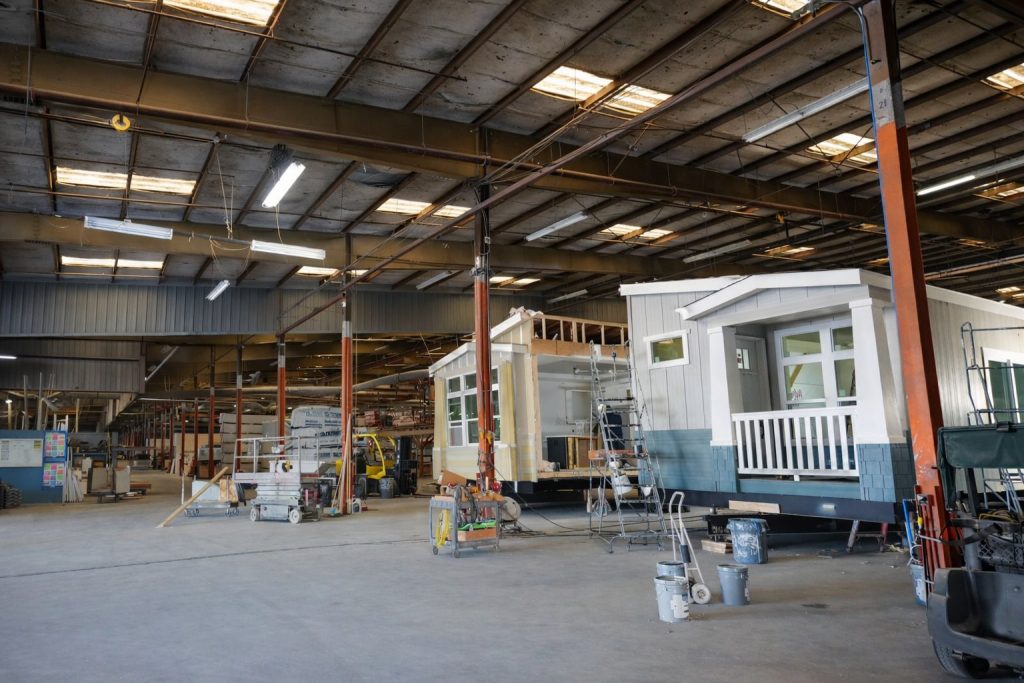
 There is still this lingering idea that manufactured homes are somehow “less than” a traditionally built home. Less sturdy. Less safe. Less advanced. But if you’ve stepped inside a modern manufactured home lately, you already know that narrative doesn’t hold up. These homes aren’t improvised or pieced together. They’re engineered, precision-built structures constructed inside climate-controlled factories using specialized equipment that traditional job sites simply don’t have access to.
There is still this lingering idea that manufactured homes are somehow “less than” a traditionally built home. Less sturdy. Less safe. Less advanced. But if you’ve stepped inside a modern manufactured home lately, you already know that narrative doesn’t hold up. These homes aren’t improvised or pieced together. They’re engineered, precision-built structures constructed inside climate-controlled factories using specialized equipment that traditional job sites simply don’t have access to.
 Every manufactured home built after June 15, 1976 must comply with the federal HUD Code established by the U.S. Department of Housing and Urban Development. That’s not optional. It’s a nationwide construction and safety standard that covers fire resistance, structural design, energy efficiency, plumbing, electrical systems, and wind safety. You can review the federal standards directly here: HUD Manufactured Housing Construction and Safety Standards – MHI
In California, homes must also meet state installation requirements overseen by the California Department of Housing and Community Development (HCD), which regulates transport, foundation systems, and setup standards: https://www.hcd.ca.gov/manufactured-and-mobilehomes.
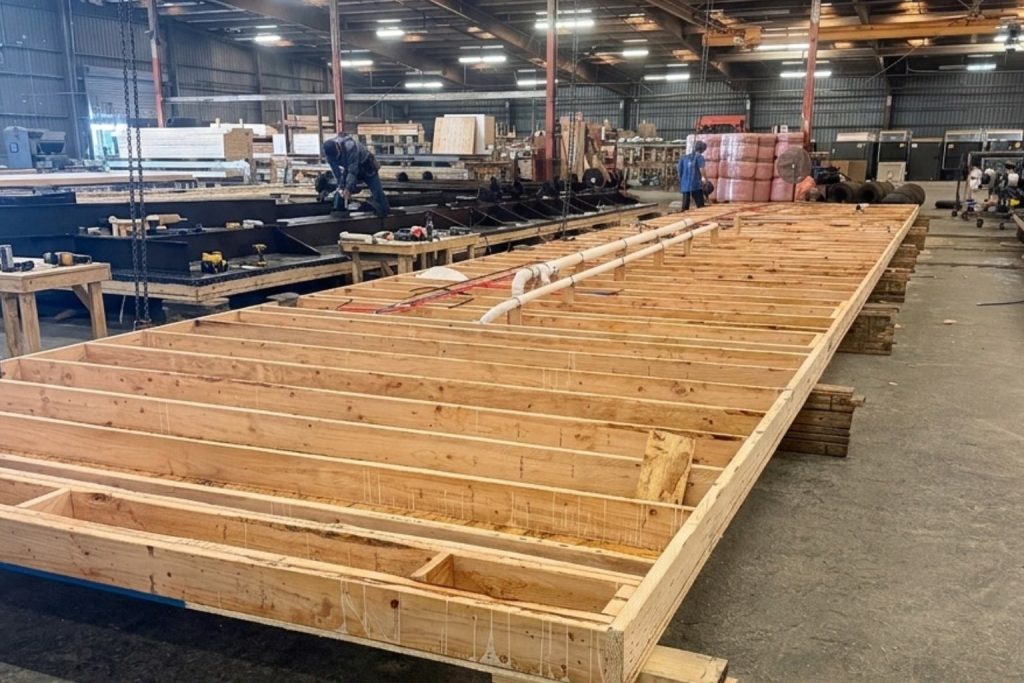 Let’s talk about how they’re actually built. Modern manufactured homes are constructed indoors, inside large production facilities, protected from rain, wind, and temperature swings. Materials aren’t sitting outside in inclement weather. Lumber isn’t exposed to weeks of weather delays. Multi-million-dollar machinery cuts, fastens, aligns, and measures components with consistency that’s difficult to replicate on a traditional job site. The crews inside these factories aren’t rotating subcontractors meeting for the first time. They’re trained specialists who perform the same trade daily — framing, electrical, cabinetry, roofing, finish work — refining efficiency and precision over years of repetition.
Because homes are built in volume, manufacturers purchase materials in bulk. That scale reduces cost per unit. It’s not about cutting corners. It’s about economies of scale. When insulation, windows, appliances, HVAC systems, and cabinetry are ordered in large quantities, pricing becomes more competitive. That cost efficiency is passed along to the buyer. Affordability in manufactured housing is rooted in process and scale, not lower safety standards or inferior construction.
Southern California buyers also care about climate performance, and rightly so. Modern manufactured homes are engineered to meet designated wind zones and energy requirements. They include insulation packages appropriate for California climate zones, sealed duct systems, double-pane windows, and efficient heating systems. Central air conditioning is absolutely available and common. In fact, most new manufactured homes can be delivered with full HVAC vent systems, along with built-in kitchen appliances, factory-installed cabinetry, and integrated lighting — all included in the base pricing structure.
 Fire safety is another area where misconceptions linger. Manufactured homes must meet specific fire resistance standards under federal code. They are inspected at multiple stages during production by third-party inspectors authorized under HUD regulations. That oversight is structured and systematic.
What often surprises buyers in Southern California is how residential these homes feel. Open floor plans. Nine-foot ceilings in some models. Large kitchen islands. Primary suites with walk-in showers and extensive closet space. Exterior elevations with dormers, porches, and architectural details that blend into traditional neighborhoods or mobile home parks seamlessly. These are not temporary structures. They’re engineered housing solutions built under consistent quality control conditions.
The bottom line is simple. Modern manufactured homes are affordable because the building process is efficient, controlled, scaled, and not because the homes are substandard. In a housing market like Southern California, where traditional site-built homes can reach price points far beyond the reach of many buyers, manufactured housing offers a practical, code-compliant, energy-efficient alternative that doesn’t compromise on comfort or safety.